La chercheuse d’esprit, a Pantomine Ballet (1777)
Th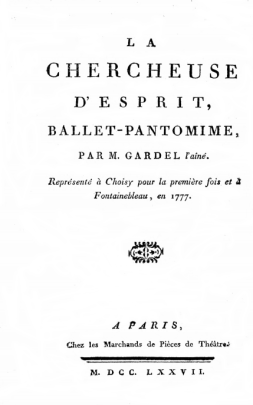 e pantomime ballet La chercheuse d’esprit (‘The Wench in Search of her Wits’) was created by Maximilien Gardel (1741-1787), who was, at the time of the work’s creation, assistant choreographer at the Paris Opéra and ballet master en survivance at the French court. The ballet was first performed before the royal court at Choisy in 1777 and then premiered at the Paris Opéra in 1778. It would be performed at that institution 187 times between 1778 and 1816 — thus the third most frequently performed pantomime ballet at the Opéra in the eighteenth century — and over 165 times before 1800 when performances at Choisy, Fontainebleau, Versailles, Paris, Bordeaux and London are counted in.
As Grimm writes (1778), “the subject of this new ballet is drawn from La chercheuse d’esprit by Monsieur Favart, an old comic opera of vaudevilles. The story has been followed scene by scene, and even as much of the music as possible has been kept.” According to Beffara (1783-84), “Monsieur Gardel fully followed the plan of Monsieur Favart’s one-act comic opera, [first] performed the 20 February 1741 with great success, the music of which is by Monsieur De la Borde. Trial also wrote music for this comic opera, the music of which was used in the pantomime ballet, as far as possible.” The 1777 program, the full score for the Opéra version, with its part books and two repetiteur scores, are extant.

The opening scene from Gardel’s La chercheuse: first violin part from the extant part books and the scene sketch from the 1777 program.
Below are presented both the original music and the summaries corresponding to each scene. (There is also a fair amount of supplementary material available which fleshes out the program sketch, but only a few details are given below.) For the music, there are informal recordings of arrangements for violin (Mojca Gal) and fortepiano / harpsichord (Thys Grobelnik), as well as mockups for full orchestra (computer-generated using the playback software NotePerformer).
To play the music, click the white arrowhead on the left in the black bars below. (Some of the ornaments in the MIDI versions may sound a little off, since the playback of such is by default.)
This webpage is an offshoot of a detailed scholarly study in progress, which will outline the ballet’s performance history and present an in-depth reconstruction of the pantomime together with a performance edition of the score.
DRAMATIS PERSONAE
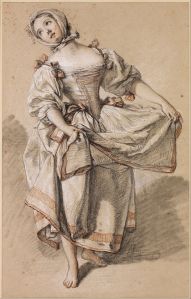 Madame Madré, a rich farm woman
Monsieur Subtil, a tabellion or bailli
Monsieur Narquois, a savant
Nicette, Madame Madré’s daughter
Alain, Monsieur Subtil’s son
L’Éveillé
Finette
Lads and Lasses of the Village
OVERTURE
(arrangement for violin (Mojca Gal) and fortepiano (Thys Grobelnik))
(MIDI full orchestra version)
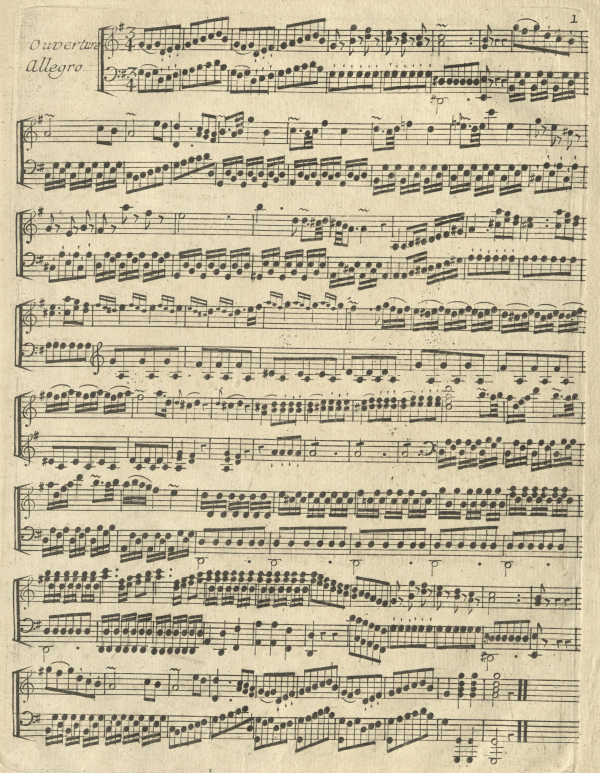
Benaut’s keyboard arrangement of the overture (1780).
SETTING
La Scène se passe dans un Village, la maison de Madame MADRÉ est dans le fond. (‘A village, Madame Madré’s house at the back.’)
SCENE 1 (No. 1)
NICETTE paroît en dansant un pas qui caractérise sa simplicité. Le moindre bruit lui porte ombrage et la moindre chose l’attriste et l’égaie. (‘Nicette comes on dancing, in a dance that reveals her simplicity. The slightest sound bothers her, and the smallest thing irks or amuses her.’)
(arrangement for violin (Mojca Gal) and fortepiano (Thys Grobelnik))
(MIDI full orchestra version, annotation in the second repetiteur score: “Nicette”)
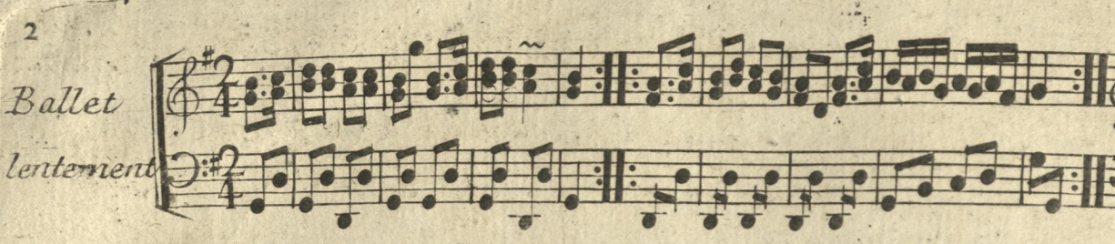
Benaut’s keyboard arrangement of no. 1 (1780).
SCENE 2 (No. 2)
M. Subtil la surprend à regarder ses doigts: elle est effrayée en le voyant; mais il la rassure et profite du moment où elle est seule pour lui déclarer son amour. Nicette le regarde, lui rit au nez, et veut se sauver: il la retient. (‘Monsieur Subtil catches her unawares looking at her fingers. She is frightened in seeing him, but he reassures her and takes advantage of this moment wherein she is alone to declare his love for her. Nicette gawks at him, laughs in his face and wants to flee, but he keeps her from going.’)
(arrangement for violin (Mojca Gal) and fortepiano (Thys Grobelnik))
(MIDI full orchestra version, annotation in the second repetiteur score: “Subtil”)
SCENE 3.1 (No. 3)
Madame Madré arrive, voit M. Subtil aux genoux de Nicette, éclate de rire et lui demande s’il a perdu l’esprit d’être amoureux d’une fille aussi simple. (‘Madame Madré enters, sees Monsieur Subtil on his knees before Nicette, breaks out into laughter and asks him if he has lost his mind in falling in love with a girl as simple as this.’)
(arrangement for violin (Mojca Gal) and fortepiano (Thys Grobelnik))
(MIDI full orchestra version, annotation in the second repetiteur score: “Madame Madré”)
SCENE 3.2 (No. 4)
Ensuite elle va à Nicette et lui fait voir qu’elle est mise comme une sote. Le Bailli la prie de ne pas la gronder et la lui demander en mariage. Madame Madré en peut revenir de sa surprise et cherche à le détourner d’un mariage aussi mal assorti; mais le Bailli la conjure de faire son bonheur en lui accordant Nicette en mariage, aimant mieux avoir pour épouse un femme simple, qu’une coquette qui le tourmenteroit toute sa vie. (‘Then she goes to Nicette and shows him that she is as good as an idiot. The bailli begs her not to be hard on her and asks her to let him marry Nicette. Madame Madré is taken aback and tries to sway him from such an ill-matched marriage. The bailli, however, entreats her to make him happy by letting him marry Nicette, for he would rather have a simple woman for a wife than a coquet who will be a thorn in his side for the rest of his life.’)
(arrangement for violin (Mojca Gal) and fortepiano (Thys Grobelnik))
(MIDI full orchestra version)
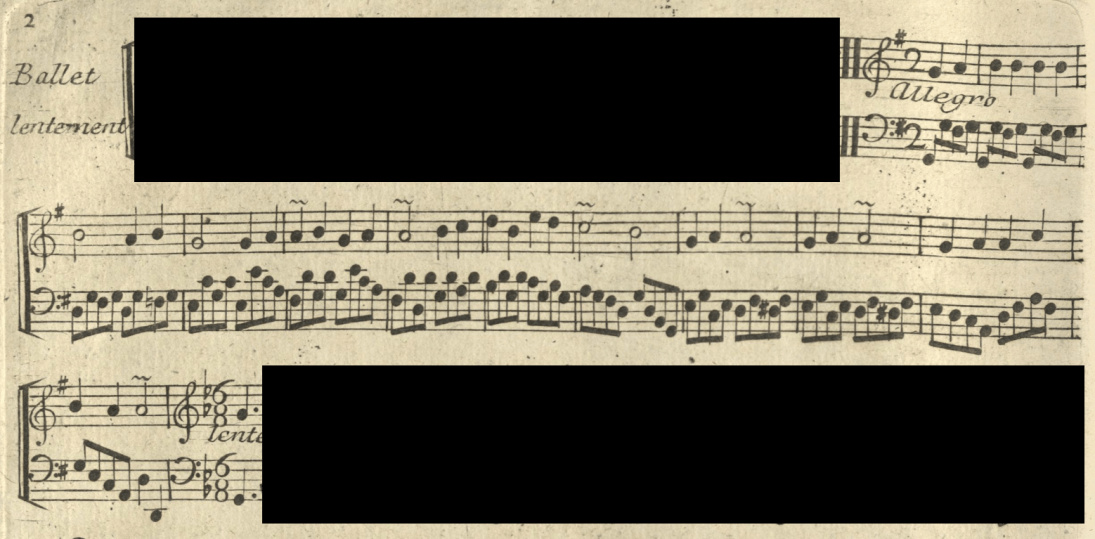
Benaut’s keyboard arrangement of no. 4 (1780).
SCENE 4.1 (No. 5)
Alain entre dans cet instant. Nicette va à lui et paroît bien aise de le voir. Ils se regardent en riant. Madame Madré, qui l’apperçoit . . . (‘Alain comes on now. Nicette goes over to him and seems very glad to see him. They smile at each other. Madame Madré, who catches sight of him . . .’)
(arrangement for violin (Mojca Gal) and fortepiano (Thys Grobelnik))
(MIDI full orchestra version, annotation in the second repetiteur score: “Alain”)
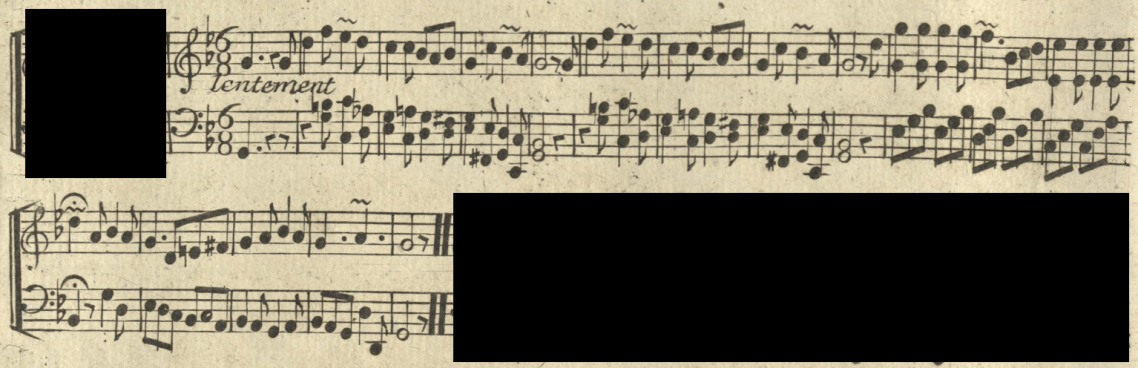
Benaut’s keyboard arrangement (1780).
SCENE 4.2 (No. 6)
. . . propose à M. Subtil de faire un échange. M. Subtil accepte de grand cœur la proposition; ils se touchent dans la main . . . (‘. . . proposes to Monsieur Subtil that they make an exchange. Monsieur Subtil heartily agrees to the proposal. They shake on it . . . ‘)
(arrangement for violin (Mojca Gal) and fortepiano (Thys Grobelnik))
(MIDI full orchestra version)
SCENE 4.3 (No. 7)
. . . et vont à leurs prétendus faire part de l’arrangement qu’ils viennent de conclure. Alain à qui Madame Madré fait sa déclaration se sauve au plus vîte. Madame Madré le laisse aller, et engage M. Subtil d’aller tout de suite avec elle chez le Notaire pour faire dresser les contrats de mariages. (‘. . . and go over to their promised ones to inform them of the arrangement just concluded. Alain, to whom Madame Madré makes her declaration, takes off in great haste. Madame Madré lets him go and engages Monsieur Subtil to go with her straightaway to the notary in order to have marriage contracts drawn up.’)
(arrangement for violin (Mojca Gal) and fortepiano (Thys Grobelnik))
(MIDI full orchestra version)
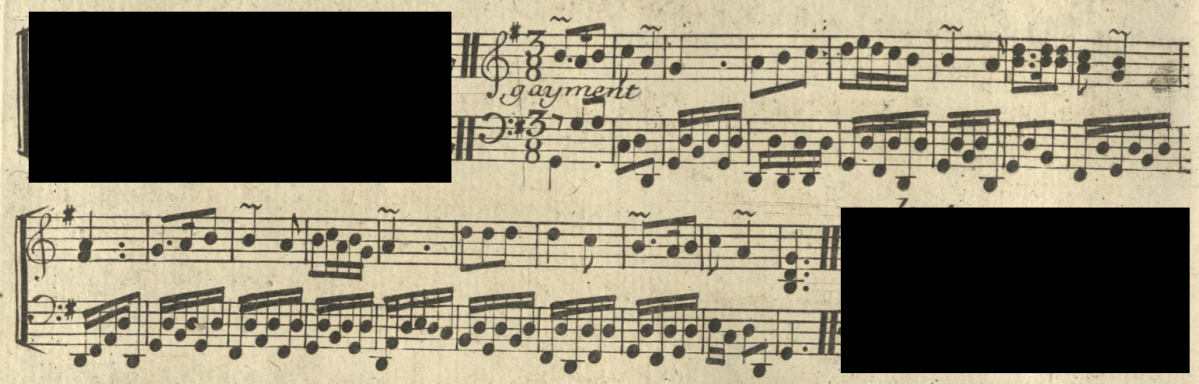
Benaut’s keyboard arrangement of no. 7 (1780).
SCENE 4.4 (No. 8)
Ensuite, elle regarde sa fille avec méprise et l’envoye chercher de l’esprit. M. Subtil lui dit adieu avec l’air d’un amant bien tendre. (‘She then sneers at her daughter and tells her to go find some wits. Monsieur Subtil says goodbye to her like a besotted lover.’)
(arrangement for violin (Mojca Gal) and harpsichord (Thys Grobelnik))
(MIDI full orchestra version, annotation in the second repetiteur score: “Allez chercher de l’esprit”)
SCENE 5.1 (No. 9)

The stereotypical appearance of a “learned” man, with his “lawyer’s” neckwear, white conservative wig, and dark garment.
Nicette seule se met à pleurer et ne sait quel parti prendre. Elle aperçoit dans le lointain M. Narquois qui se promène un livre à la main, et qui médite profondément sur ce qu’il lit. Elle va à lui espérant qu’un homme qui passe pour un prodige de science pourra lui procurer de l’Esprit. Elle l’aborde en tremblant, et lui fait une grande révérence. M. Narquois admire son air innocent, et lui demande ce qu’elle veut de lui: elle lui fait entendre qu’elle desire de l’esprit, et le prie de lui dire où l’on en peut trouver pour de l’argent. M. Narquois sourit à cette demande, ce qui afflige l’innocente Nicette; mais il la console en lui apprenant que c’est en lisant de bons livres que l’on peut en acquérir. Nicette, en conséquence, lui demande le sien, qu’il prête avec plaisir, elle le retourne de tous les côtés et finit par le laisser tomber; (‘Alone, Nicette begins to cry, at a loss about what to do. She catches sight of Monsieur Narquois at some breadth, who is strolling along with a book in his hand, in deep meditation concerning what he is reading. She goes over to him in the hope that a man who passes for a prodigy in learning will be able to get some wits for her. She goes up to him, shaking, and does a grand révérence. Monsieur Narquois is surprised at her innocent manner and asks her what she wants with him. She gives him to understand that she wants wits and entreats him to tell her where she might buy such. Monsieur Narquois smirks at this question, which upsets innocent Nicette, but he makes up for this by informing her that such can be acquired by reading good books. Nicette then asks him for his book, which he gladly hands over. She turns it this way and that and ends up dropping it.’)
(arrangement for violin (Mojca Gal) and fortepiano (Thys Grobelnik))
(MIDI full orchestra version, annotation in the second repetiteur score: “Narquois”)
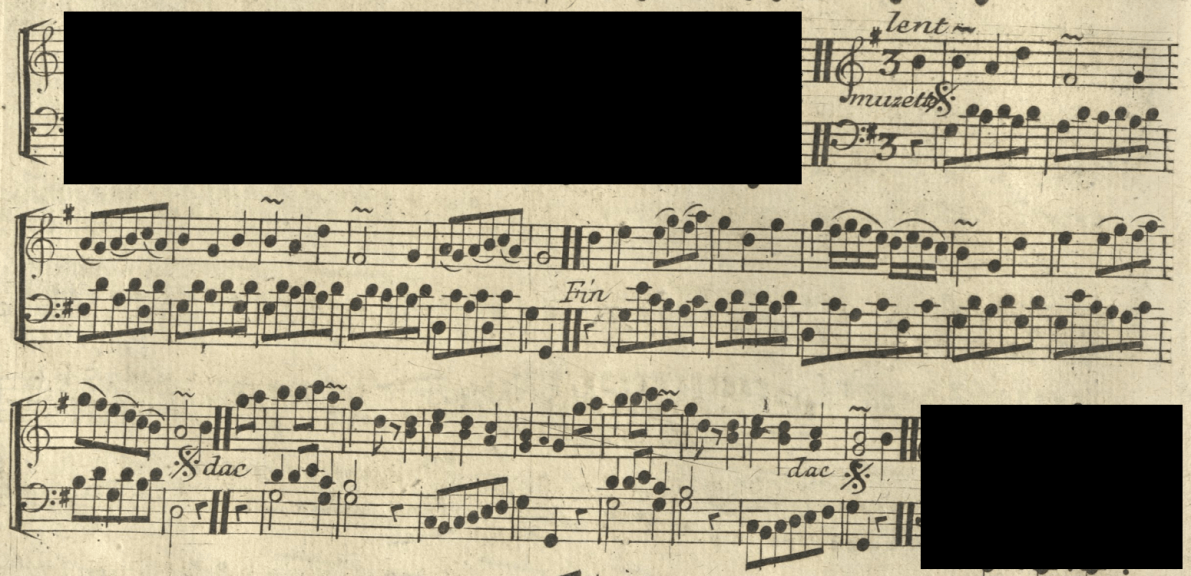
Benaut’s keyboard arrangement of no. 9 (1780).
SCENE 5.2 (No. 10)
M. Narquois en colère le ramasse . . . (‘Monsieur Narquois angrily picks it up . . . ‘)
(arrangement for violin (Mojca Gal) and fortepiano (Thys Grobelnik))
(MIDI full orchestra version, annotation in the second repetiteur score: “Colère de Narquois”)
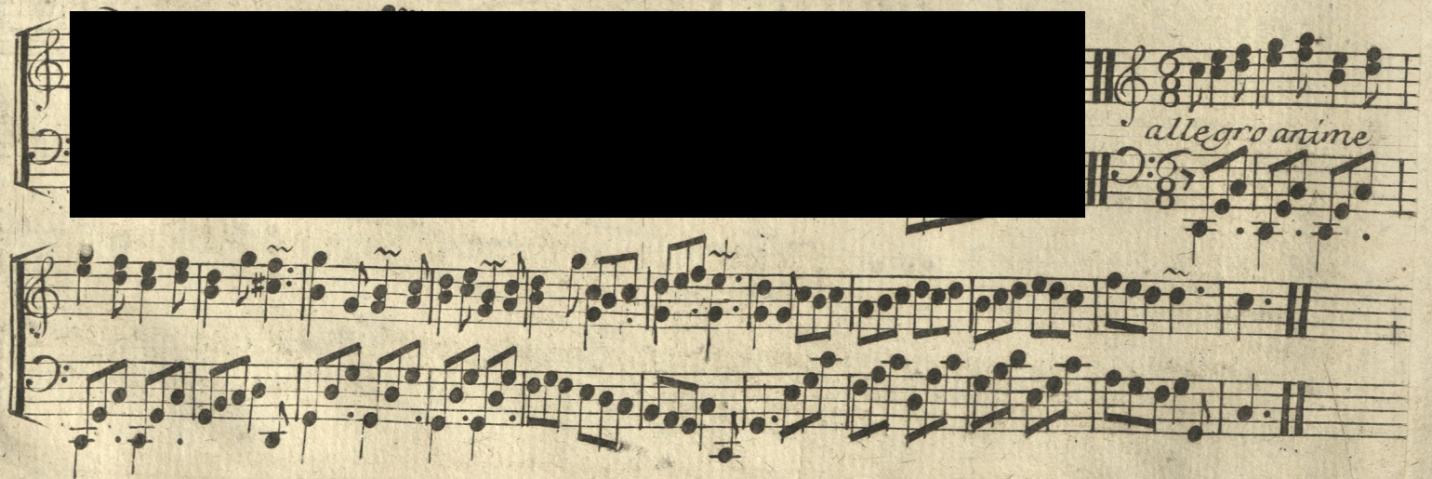
Benaut’s keyboard arrangement of no. 10 (1780).
SCENE 5.3 (No. 11)
. . . et la laisse-là. (‘. . . and leaves her there.’)
(arrangement for violin (Mojca Gal) and harpsichord (Thys Grobelnik))
(MIDI full orchestra version)
SCENE 6.1 (No. 12)
L’Eveillé qui survient, offre encore à Nicette un espoir; . . . (‘L’Éveillé, who appears, now awakens new hope in Nicette; . . .’)
(arrangement for violin (Mojca Gal) and fortepiano (Thys Grobelnik))
(MIDI full orchestra version, annotation in the second repetiteur score: “L’Éveillé”)
SCENE 6.2 (No. 13)
. . . elle l’aborde et lui fait part de ses chagrins. l’Eveillé qui la trouve gentille la rassure et lui promet qu’en un instant il lui donnera tout l’esprit possible. Il lui prend la main, la lui baise et va pour l’embrasser; quand Finette apperçoit son amant qui cajole Nicette, elle arrête les progrès de la leçon et menace Nicette, qui lui dit que c’est mal à elle d’empêcher que l’Eveillé lui donne de l’esprit. Finette lui demande pardon de l’avoir interrompu; mais elle apprend que ce n’est qu’à elle qu’il doit en donner, et sort en amenant son Amant. (‘. . . she goes up to him and and tells him of her sorrows. L’Éveillé, who is taken with her, reassures her and promises to give her in an instant all possible understanding. He takes her hand, kisses it and is about to kiss when Finette sees her lover coaxing Nicette. She interrupts the lesson and threatens Nicette, who tells her that it is ill of her to keep L’Éveillé from giving her wits. Finette asks pardon for having interrupted but informs her that it is not to her that he should be giving such and leaves, leading off her sweetheart.’)
(arrangement for violin (Mojca Gal) and fortepiano (Thys Grobelnik))
(MIDI full orchestra version, annotation in the second repetiteur score: “L’Éveillé et Nicette”)
SCENE 7.1 (No. 14)
Nicette, toujours ballotée, apperçoit Alain qui vient à elle. Un plaisir secret qu’il ne peut définir le fait rire à la vue de Nicette, qui croit qu’il se moque aussi d’elle; mais Alain qui la regarde et qui voudroit exprimer ce qu’il sent, l’assure que c’est plus fort que lui, et qu’il rira toujours en la voyant. Ils se regardent et ne peuvent se rien dire. (‘Still torn, Nicette catches sight of Alain coming towards her. A secret pleasure which he cannot define makes him laugh at the sight of Nicette, who thinks that he is making fun of her. But Alain, who looks at her and who would express what he feels, assures her that it is, rather, merely him, and that he will always laugh when he sees her. They look at each other but cannot say anything to each other.’)
(arrangement for violin (Mojca Gal) and fortepiano (Thys Grobelnik))
(MIDI full orchestra version, annotation in the second repetiteur score: “Alain et Nicette”)
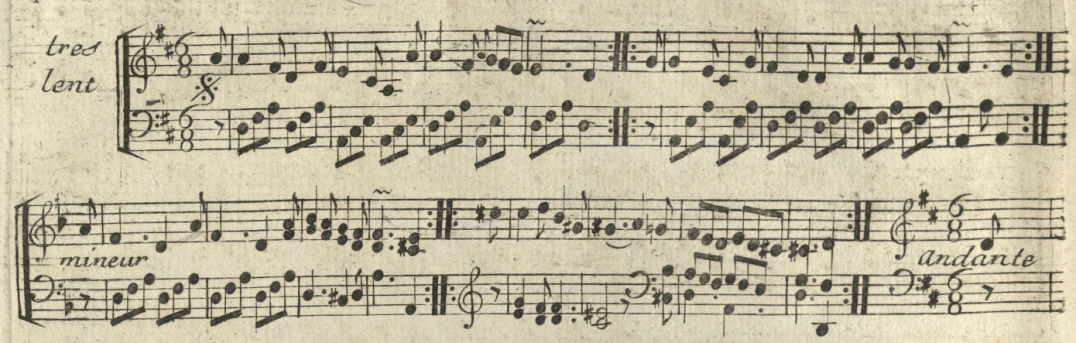
Benaut’s keyboard arrangement of no. 14 (1780).
SCENE 7.2 (No. 15)
Ennuyés d’être aussi sots l’un et l’autre, ils prennent le parti d’abandonner le village pour aller à Paris chercher de l’Esprit. Ils se donnent le bras pour leur voyage . . . (‘Annoyed that they are both so stupid, they make up their minds to forsake the village and go to Paris in order to look for wits. They give each other an arm in order to set off . . .’)
(arrangement for violin (Mojca Gal) and fortepiano (Thys Grobelnik))
(MDI full orchestra version)
SCENE 8 (No. 16)
. . . q[u]and Madame Madré les arrête, fait rentrer Nicette dans la maison, et retient Alain avec elle. (‘. . . when Madame Madré stops them, makes Nicette go back into the house and makes Alain stay with her.’)
(arrangement for violin (Mojca Gal) and fortepiano (Thys Grobelnik))
(MIDI full orchestra version)
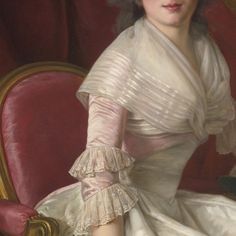
A detail showing a fichu or wrap covering the neck and upper chest left bare by the dress.
Madame Madré apparently finds fault with Nicette’s too revealing appearance and sends her inside to put on a fichu, thereby creating an opportunity for herself to be alone with Alain. This is explicit in Favart’s libretto and explains Nicette’s appearance in scene 10 below wearing one. The corresponding scene in Favart is as follows:
Mad.: Alain, where do you think you’re going with this green girl? Stay where you are. I need to speak to you. (To Nicette:) And you, you cheeky thing, what’s with this all-too tender giving of the arm?
Nic.: I didn’t, I didn’t give him anything. I just let him take it.
Mad. [(Aside:)] O, I can’t leave them alone together! I fear that this will lead to pleasure taken. [(To Nicette:)] And can you go on like this, without a blush, you silly goose?
Nic.: Sorry, mother, but I still don’t know when I’m supposed to blush.
Mad.: Off with you, child! Go and put on a fichu.
Nic.: But I’m not cold, mother.
Mad.: Go, I say. What, do you think I don’t know that you want to have more intercourse with Alain? Well? Do you think?
Nic: No, mother.
(Nicette exits, looking back at Alain several times. Alain watches her go.)
SCENE 9.1 (No. 17)
Ses yeux témoignent le plaisir qu’elle sent de posséder un cœur aussi novice; elle l’engage à lui parler de la joie qu’il aura d’être uni avec elle; mais Alain qui ne connoît point la dissimulation, reste immobile à toutes ses agaceries. (‘Her eyes show the pleasure she feels in having such a novice’s heart. She urges him to speak of the joy that will be his when he is united with her, but Alain, who knows nothing of dissimulation, remains unmoving before all her coquettishness.’)
(arrangement for violin (Mojca Gal) and fortepiano (Thys Grobelnik))
(MIDI full orchestra version, annotation in the second repetiteur score: “Madame Madré et Alain”)
SCENE 9.2 (No. 18)
Madame Madré imagine que son indifférence ne provient que de ce qu’il ne peut pas s’exprimer, et pour le mettre à même de pouvoir répondre à l’amour qu’elle a pour lui, elle l’engage à recevoir une leçon. Alain enchanté d’apprendre la manière de s’énoncer avec une femme que l’on aime; regarde de tout ses yeux Madame Madré, lui présente un bouquet, un ruban, se met à ses genoux et lui prend la main pour la baiser; ensuite, elle dit à Alain d’en faire autant; mais il la regarde en riant et se sauve. Madame Madré court après lui. (‘Madame Madré thinks that his indifference is only because he cannot express himself. In order to enable him to respond to the love which she has for him, she urges him to receive a lesson. Delighted at the prospect of learning how to express oneself to a woman that one loves, he looks wide-eyed at madame Madré, who presents him with a nosegay, a ribbon, gets down on her knees and takes his hand in order to kiss it. She then tells Alain to do the same, but he looks at her with a laugh and runs off. Madame Madré runs after him.’)
(arrangement for violin (Mojca Gal) and fortepiano (Thys Grobelnik))
(MIDI full orchestra version, annotation in the second repetiteur score: “Leçon d’Amour de Madame Madré à Alain”)
SCENE 10 (No. 19)
Nicette revient et va se mirer dans un sceau d’eau. Elle ajuste son fichu, et se met une fleur dans les cheveux. (‘Nicette comes back and goes over to look at her reflection in a bucket of water. She adjusts her fichu and puts a flower in her hair.’)
(arrangement for violin (Mojca Gal) and fortepiano (Thys Grobelnik))
(MIDI full orchestra version, annotation in the second repetiteur score: “Nicette, une Rose à la Main”)
SCENE 11 (No. 20)
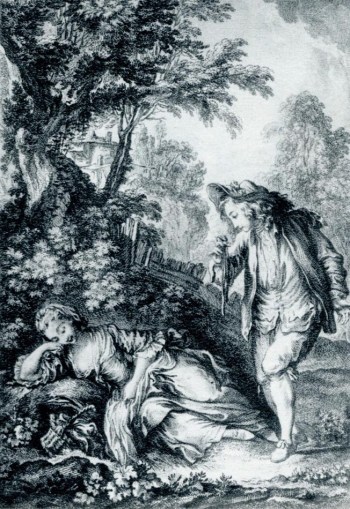 Finette qui ne sçait ce qu’est devenu l’Eveillé, le cherche de tous les côtés. Elle l’apperçoit de loin et se met sur un lit de gazon, et feint d’être endormie pour jouer un tour à l’Eveillé qu arrive en cherchant Finette. Il la trouve qui sommeille; il la prend par la main et va pour l’embrasser, quand elle se réveille en riant à ses dépens. Il veut la saisir pour l’embrasser de force; mais elle lui échappe et se sauve. Il la poursuit, elle se fâche et lui défend de continuer. L’Eveillé piqué de son refus, lui fait la révérence et s’en va. Finette le rappelle et lui accorde le baiser tant desiré. Ils se donnent des marques de leur amour et sortent ensemble. (‘Not knowing what has become of L’Éveillé, Finette has been looking everywhere for him. She catches sight of him in the distance and lies down on a grassy spot, pretending to be asleep so as to play a joke on him. L’Éveillé enters, looking for Finette. He finds her slumbering. He takes her by the hand and is about to kiss it when she wakes up, laughing at his expense. He means to take a hold of it in order to give a forceful kiss, but she eludes him and flees from him. He runs after her; she gets angry and demands that he stop. Put out by being jilted, L’Éveillé does a révérence and goes off. Finette calls him back and grants him the kiss he so wishes. They show their love and exit together.’)
(arrangement for violin (Mojca Gal) and fortepiano (Thys Grobelnik))
(MIDI full orchestra version, annotation in the second repetiteur score: “Finette”)
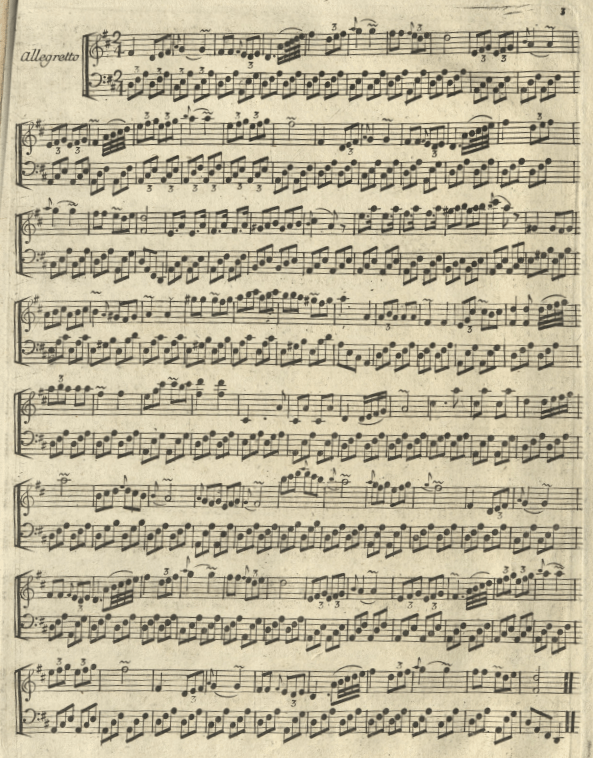
Benaut’s keybaord arrangement of no. 11 (1780).
SCENE 12 (No. 21)
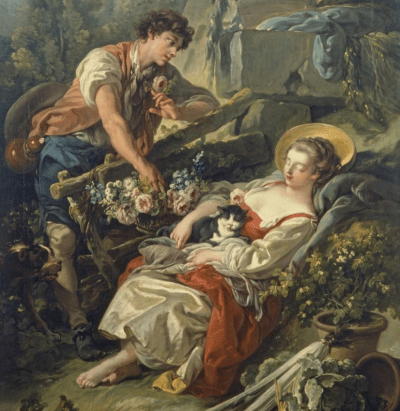 Nicette qui a été présente à toute cette scène se promet d’en faire bon usage: elle desire ardemment qu’Alain vienne vite pour mettre à profit la leçon qu’elle vient de prendre. Elle est bien-tôt satisfaite; car Alain paroît un ruban et un bouquet à la main. Nicette se met vite sur le lit de gazon et fait semblant de dormir. Alain n’ose l’éveiller; elle lui tend la main et la remue de toutes ses forces pour qu’il la lui baise, mais il ne sait ce qu’elle veut dire par-là. Il la tire bien fort par le bras, elle se lève et lui dit qu’elle sommeille. Alain qui meurt d’envie de répéter avec Nicette la leçon qu’il a reçue de Madame Madré, la place de manière à recevoir ses hommages, quand M. Subtil vient les interrompre. Nicette fait cacher Alain derrière elle, . . . (‘Having witnessed all this, Nicette is set upon turning it to good use. She is most keen that Alain straightaway return so that she might profit from the lesson which she has just had. And her wish is soon satisfied, for in no time Alain appears with a ribbon and nosegay in hand. Nicette quickly lies down on the grassy spot and pretends to be sleeping. Alain dares not wake her. She holds out her hand and moves it most forcefully so that he might kiss it, but he is at a loss about what she means thereby. He pulls her hard by the arm; she gets up and tells him that she has been dozing. Alan is dying to repeat the lesson which he received from Madame Madré and places her so that she can receive his tokens of affection, when Monsieur Subtil shows up, interrupting them. Nicette has Alain hide behind her. . .’)
(arrangement for violin (Mojca Gal) and fortepiano (Thys Grobelnik))
(MIDI full orchestra version, annotation in the second repetiteur score: “Nicette”)
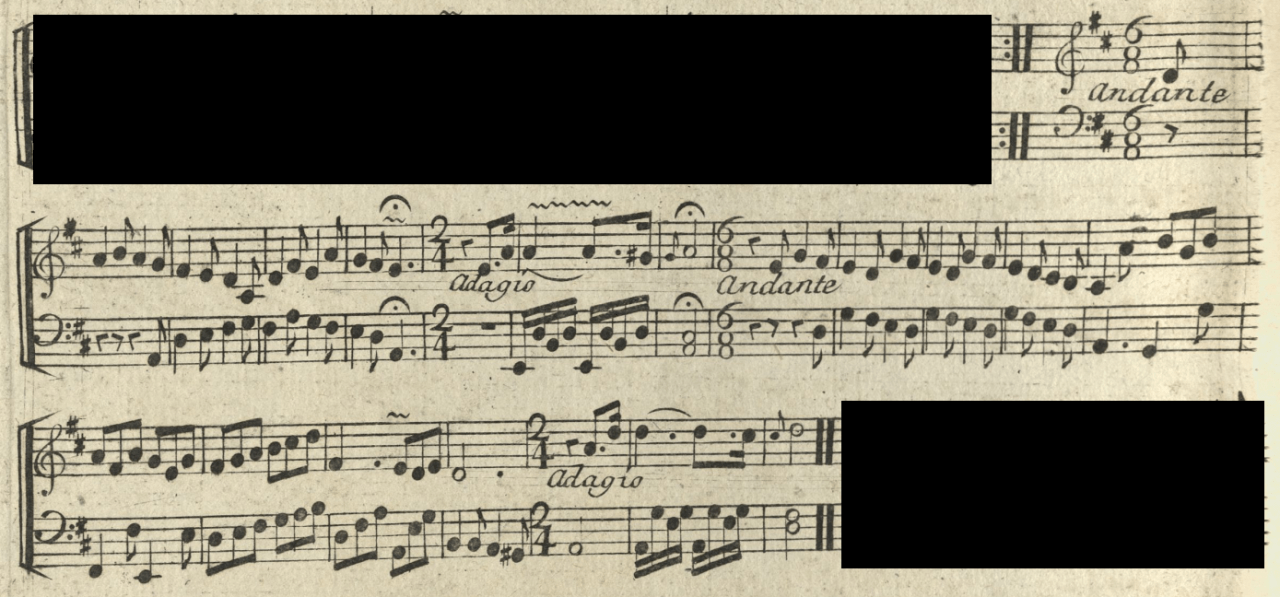
Benaut’s keyboard arrangement of no. 21 (1780).
SCENE 13.1 (No. 22)
. . . et reçoit M. Subtil d’un air de contentement qui l’enchante. Nicette qui commence à connoître la ruse, fait entendre à M. Subtil que sa mère l’attend au bout du village. (‘. . . and receives Monsieur Subtil with seeming contentment, and this delights him. Nicette, who begins to understand what a ruse is, gives Monsieur Subtil to understand that her mother is waiting for him on the outskirt of the village.’)
(arrangement for violin (Mojca Gal) and fortepiano (Thys Grobelnik))
(MIDI full orchestra version, annotation in the second repetiteur score: “Subtil”)
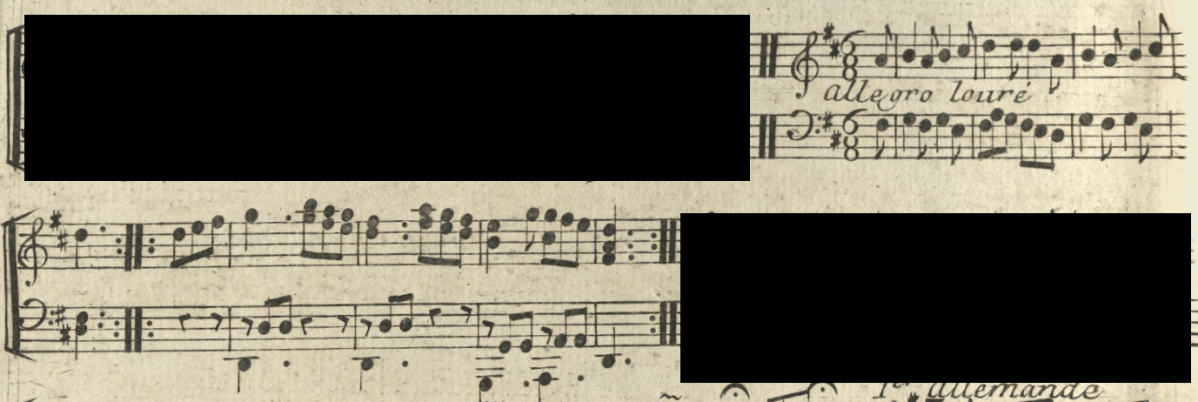
Benaut’s keyboard arrangement of no. 22 (1780).
SCENE 13.2 (No. 23)
Il sort désespéré de ne pouvoir être plus long-tems avec elle. (‘He goes off, let down that he could not be with her longer.’)
(arrangement for violin (Mojca Gal) and fortepiano (Thys Grobelnik))
(MIDI full orchestra version)
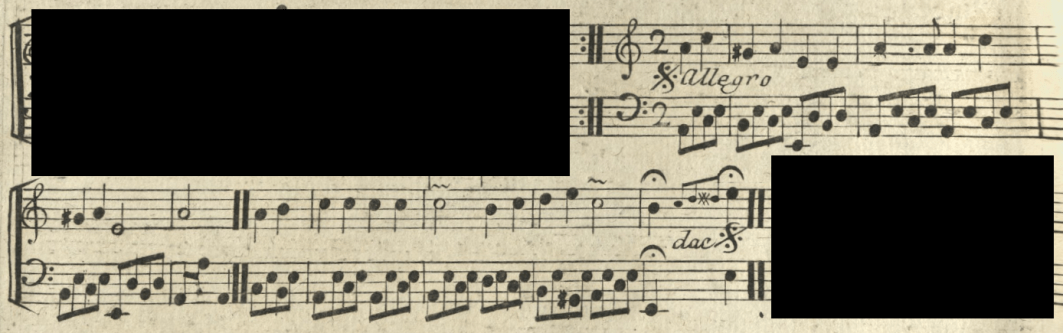
Benaut’s keyboard arrangement of no. 23 (1780).
SCENE 14 (No. 24)
Alain rep[r]end la leçon qu’il avoit commencée; il fait la révérence à Nicette, se met à ses genoux, lui présente le ruban et lui attache le bouquet. Un charme secret se répand dans leurs ames; leurs cœurs palpitent. Alain prend la main de Nicette et va pour la baiser, . . . (‘Alain returns to the lesson which he began. He does a révérence to Nicette, gets down on his knees before her, presents her with the ribbon and attaches the nosegay to her person. A hidden charm thrills through them, and their hearts are all aflutter. Alain takes Nicette by the hand and is about to kiss it, . . .’)
(arrangement for violin (Mojca Gal) and fortepiano (Thys Grobelnik))
(MIDI full orchestra version, annotation in the second repetiteur score: “Alain et Nicette”
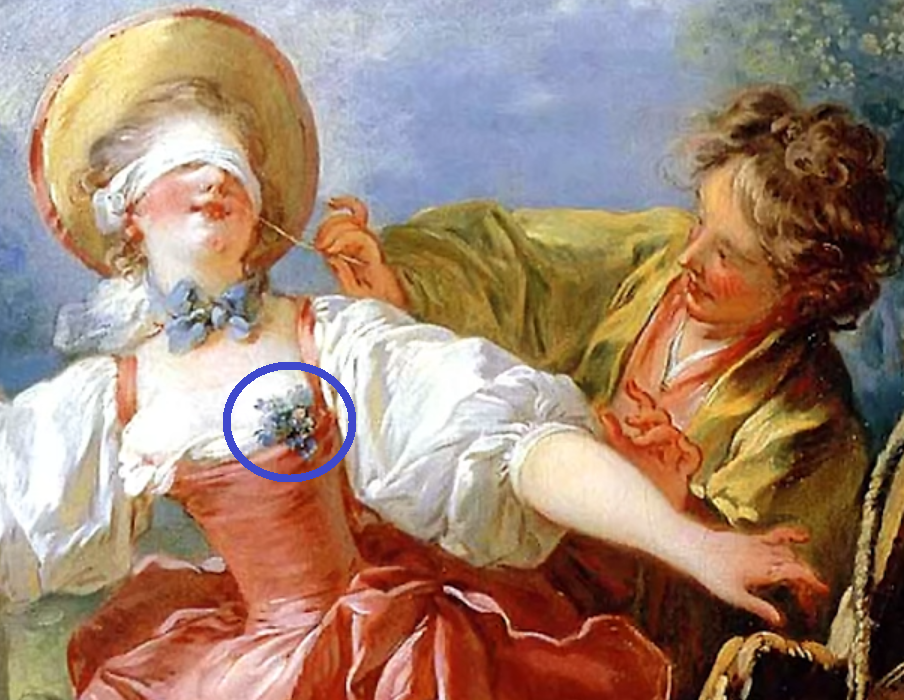
A small bouquet attached to the bodice and worn over the heart, in a detail from Fragonard’s Blind Man’s Bluff.
SCENE 15 (No. 25)
. . . quand ils entendent l’Eveillé et Finette. Nicette fait cacher Alain dans sa maison et congédie les importuns, en leur disant que M. Subtil les attend. (‘. . . when they hear L’Éveillé and Finette. Nicette has Alain hide in her house and gets rid of the intruders by telling them that Monsieur Subtil is waiting for them.’)
(arrangement for violin (Mojca Gal) and fortepiano (Thys Grobelnik))
(MIDI full orchestra version, annotation in the second repetiteur score: “L’Éveillé et Finette”)
SCENE 16 (No. 26)
 Elle appelle Alain qui reprend de nouveau la main de Nicette et qui la lui baise tendrement. Leur bonheur éclate dans leurs yeux; ils sentent l’esprit qui se communique; Alain tombe aux genoux de sa chère Nicette et la serre tendrement dans ses bras et fait éclater ses transports. (‘She calls Alain back, who takes Nicette’s hand again and kisses it lovingly. Their eyes beam with happiness; they feel the stirring of their wits. Alain falls to his knees before his dear Nicette and lovingly enfolds her in his arms, bursting with joy.’)
(arrangement for violin (Mojca Gal) and harpsichord (Thys Grobelnik))
(MIDI full orchestra version, annotation in the second repetiteur score: “Alain et Nicette”)
SCENE 17 (No. 27)
Madame Madré, M. Subtil, l’Eveillé et Finette arrivent dans cet instant. Madame Madré entre en fureur et sépare les deux Amans. M. Subtil, de son côté, renvoie son fils, qui ne peut quitter sa chère Nicette. Finette qui voit leur peine, s’intéresse à leur sort et va avec l’Eveillé prier pour qu’on les unisse. Madame Madré et M. Subtil, qui sentent bien qu’ils feroient une sotise de les séparer, les font approcher et donner leur consentement. Alain et Nicette tombent à leurs genoux et leur expriment leur reconnoissance. Madame Madré embrasse sa fille et M. Subtil lui propose la main; elle l’accepte, et l’on appelle les Garçons et les Filles du Village . . . (‘Madame Madré, Monsieur Subtil, L’Éveillé and Finette enter at this moment. Madame Madré becomes furious and parts the two lovers. For his part, Monsieur Subtil tries to send his son away, but the latter will not leave his dear Nicette. Seeing their predicament, Finette intervenes on their behalf, goes over with L’Éveillé and begs that the two be united. Madame Madré and Monsieur Subtil, who realize that it would be foolish on their part to come between them, have the two draw near and give them their consent. Alain and Nicette fall to their knees before them and show their gratitude. Madame Madré embraces her daughter, and Monsieur Subtil offers her his hand. She accepts, and the lads and lasses of the village are called . . .’)
(arrangement for violin (Mojca Gal) and harpsichord (Thys Grobelnik), with opening rondeau repeated although not so marked in the score)
(MIDI full orchestra version, annotation in the repetiteur score: “Entrée Générale”)
DIVERTISSEMENT
. . . qui viennent célébrer le Mariage des Epoux par des danses villageoises, et le Ballet finit par une contredanse générale. (‘. . . who come to celebrate the couple’s marriage with village dances, and the ballet ends with a general contredanse.’)
Apart from Nicette’s opening dance, which clearly included some pantomime, all of the dancing in the ballet was apparently concentrated in the final divertissement, which was subject to alteration. Five different versions can be discerned in the surviving materials, none of which can be dated precisely, although the relative chronology is fairly certain. The version presented below was certainly in existence by 1780, apparent from the Benaut’s compilation adapted for keyboard. There was a substantial amount of dancing here, such that a review from 1778 published in the MS (1779: 11/158) complained that “the divertissement that brings the action to an end should be shorter.” At some point the first nine numbers were dropped, leaving only the tambourins and suite of allemandes, it seems.
1 Air
(MIDI full orchestra version)
Given the context and a playing time of about forty seconds, this piece was likely used for the entrance of the corps (twelve men and twelve women in the 1778 production).
2 Rondeau Allegro
(MIDI full orchestra version)
This was likely accompaniment for a group dance. For an example of such choreography nearly contemporary with La chercheuse, click here.
3 Romance
(MIDI full orchestra version)
This was almost certainly accompaniment for a male solo; a “monsieur Vermilly” apparently danced to it in some performance.
4 Gavotte
(MIDI full orchestra version)
5 Gigue
(MIDI full orchestra version)
6 Pastorale
(MIDI version)
The orchestral parts are not extant; the reduction is presented here.
7 Pas Seul
(MIDI version)
Again, the orchestral parts are not extant; the reduction is presented here.
8 Gigue Très Légère
(MIDI version)
Again, the orchestral parts are not extant, and the reduction is presented here.
9 Marqué
(MIDI full orchestra version)
10 Premier et Second Tambourins
The second tambourin (in the minor) is marked as a solo in the full score, presumably for a female soloist, since there was a tendency for minor sections to be given to women soloists, judging from the extant choreography found in the Ferrère manuscript. A percussion part has been added to the music, since there is evidence that at the Opéra the musical form the tambourin could include a part for the folk drum the tambourin.
(MIDI full orchestra version)
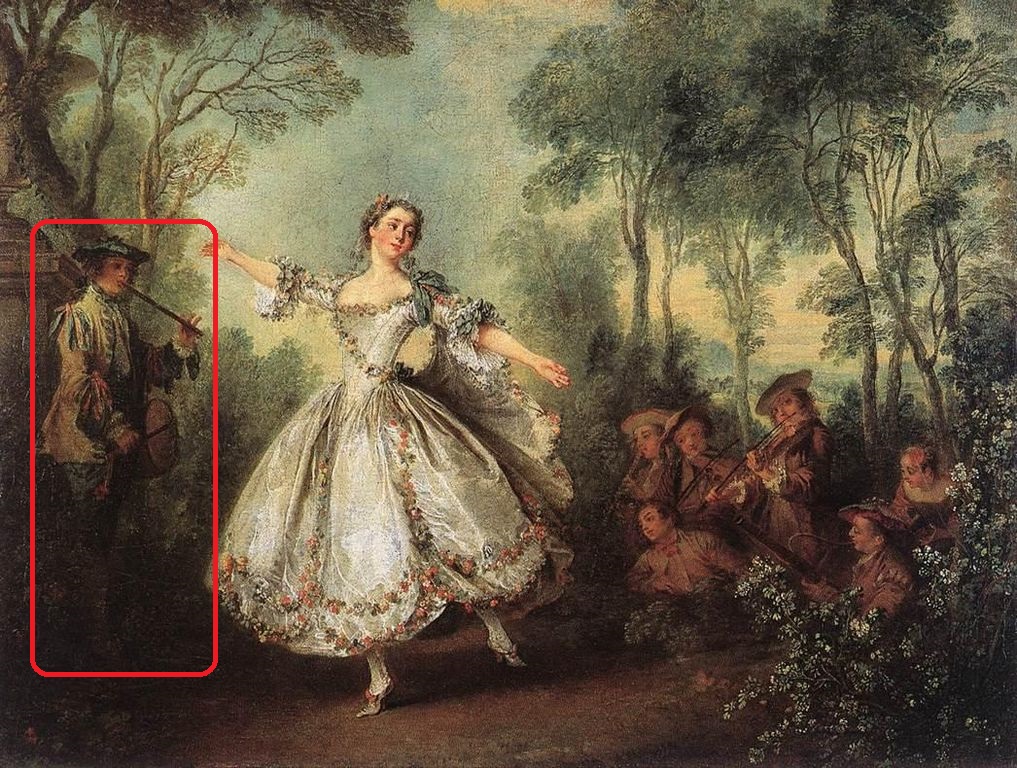
Lancret’s portrait of the dancer Camargo (1730s), with a musician on the left playing the tambourin and galoubet.
11 A Suite of Six Allemandes
A suite of six allemandes follows, to be played without any intervening pauses, it seems. At least part of this suite must have been accompaniment for a contredanse générale, the usual way of ending a ballet at this time. In his 1778 program, Gardel writes that “the ballet ends with a contredanse générale.” And a review of the 1778 Opéra production also states that “the contredanse which ends this piece was wildly applauded. Its figures are greatly varied, and there was nothing wanting in the execution” (JP 11 Mar. 1778: 280). The total playing time of the suite is about twelve minutes, which seems too long for the entire suite to have been used for the final contredanse.
First Allemande
(MIDI full orchestra version)
An annotation in the répétiteur score states that this piece was to be played through six times.
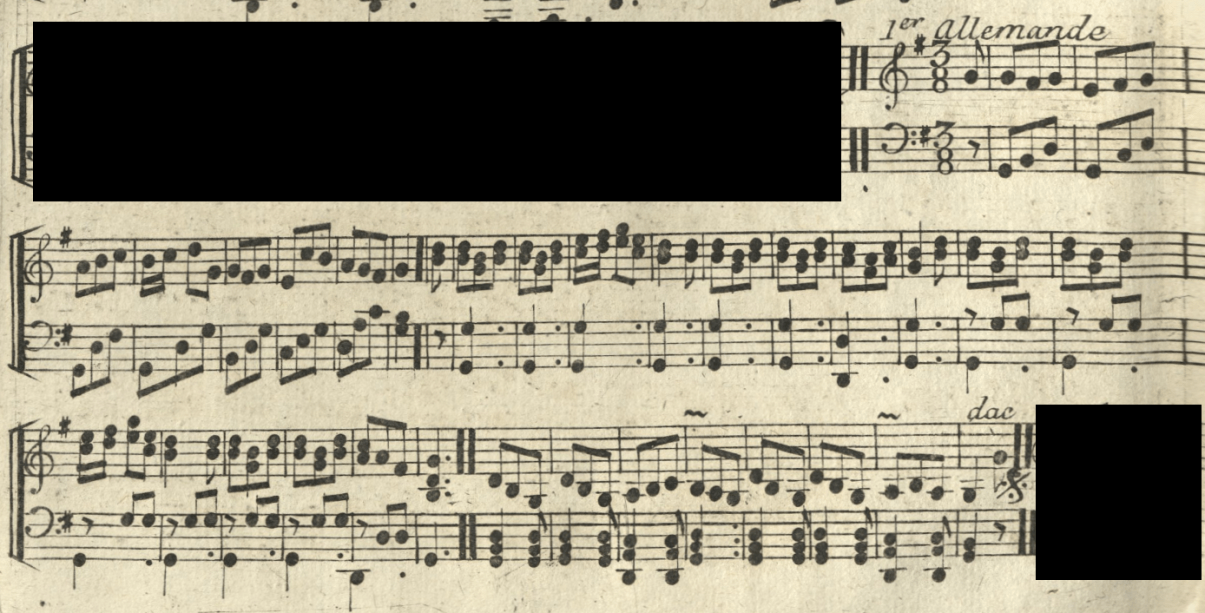
Benaut’s keyboard arrangement of the first allemande (1780).
Second Allemande
(MIDI full orchestra version)
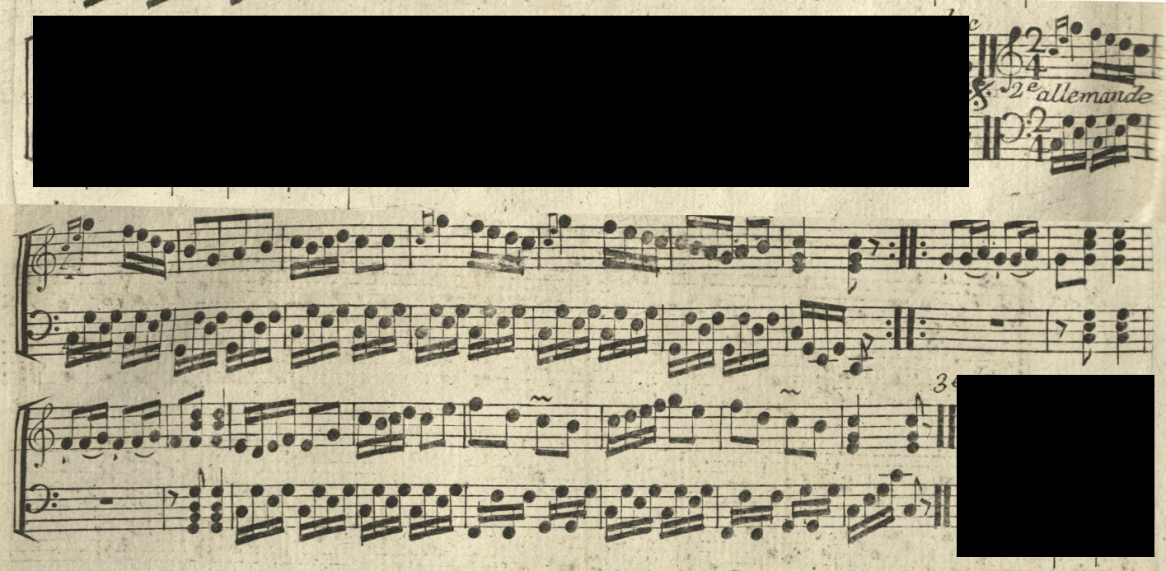
Benaut’s keyboard arrangement of the second allemande (1780).
Third Allemande
(MIDI full orchestra version)
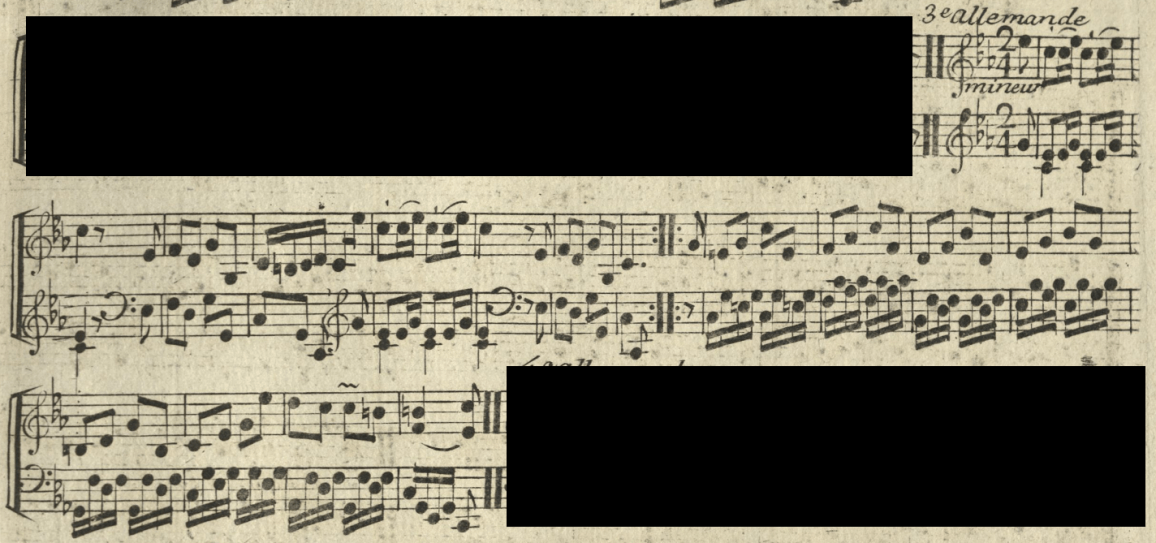
Benaut’s keyboard arrangement of the third allemande (1780).
Fourth Allemande
(MIDI full orchestra version)
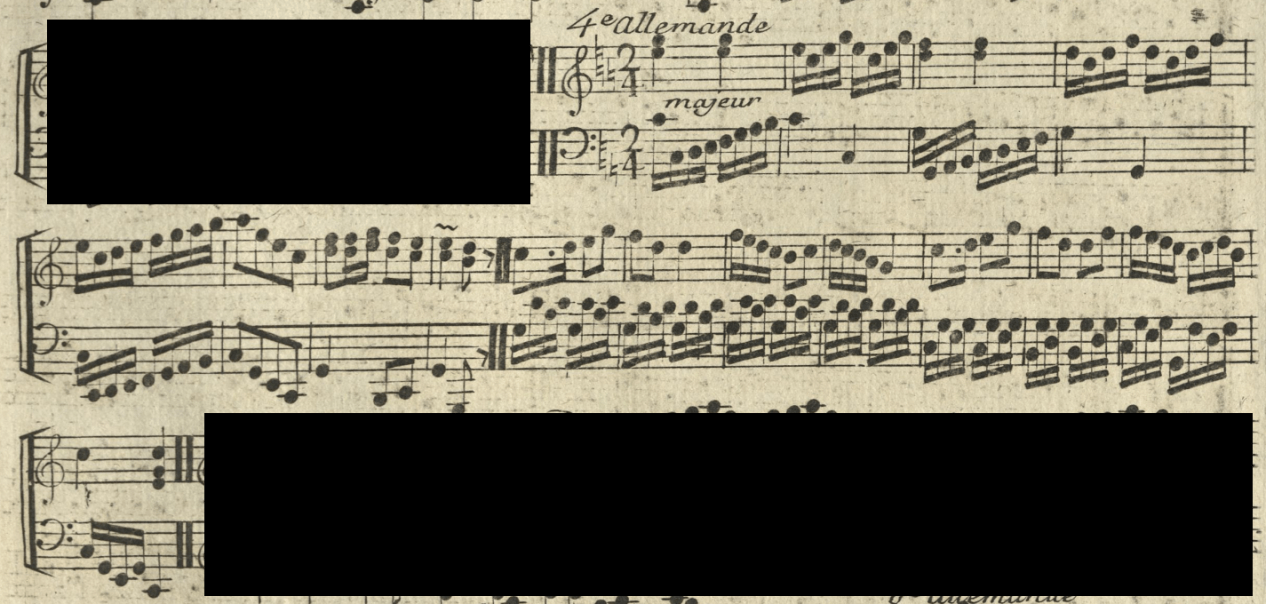
Benaut’s keyboard arrangement of the fourth allemande (1780).
Fifth Allemande
(MIDI full orchestra version)
An annotation in both the répétiteur score and the full score states that the fourth allemande was to be repeated after the fifth, before proceeding to the sixth.
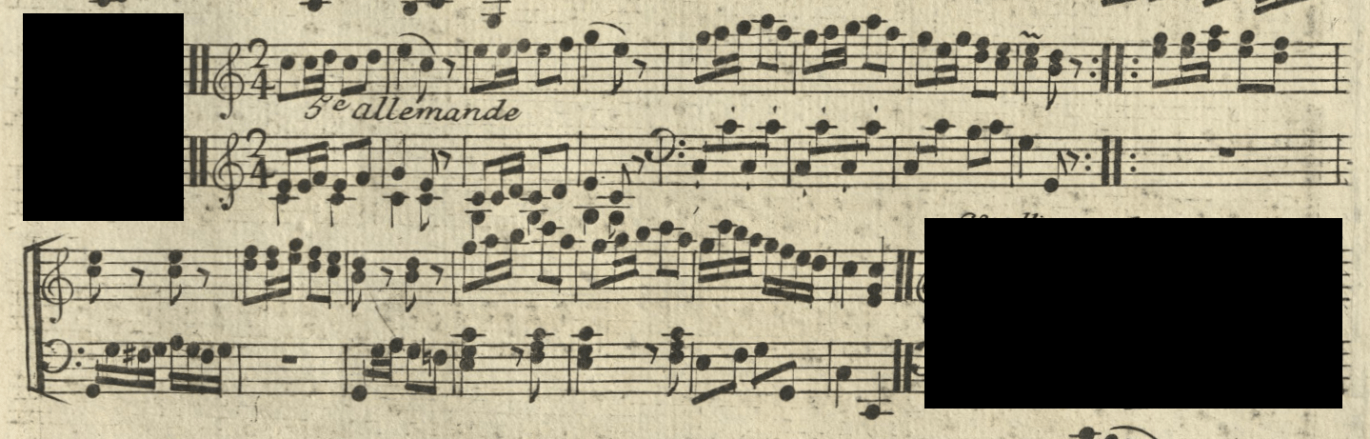
Benaut’s keyboard arrangement of the fifth allemande (1780).
Sixth Allemande
(MIDI full orchestra version)
An annotation in both the répétiteur score and the full score indicates that this piece was to be played through three times.

Benaut’s keyboard arrangement of the sixth allemande (1780).
FINAL TABLEAU
The ballet almost certainly ended with a general tableau, i.e., a grouping of the performers in various poses in order to create a kind of “picture.” This was common practice in various theatrical works at the time. “All of the operas, tragedies, pastorals, comédies-ballets, ballets héroïques, in a word, all of our operas end with a general ballet, at the end of which all the dancers remain en attitude until the curtain has fallen.” (JT 15 Jan. 1778)
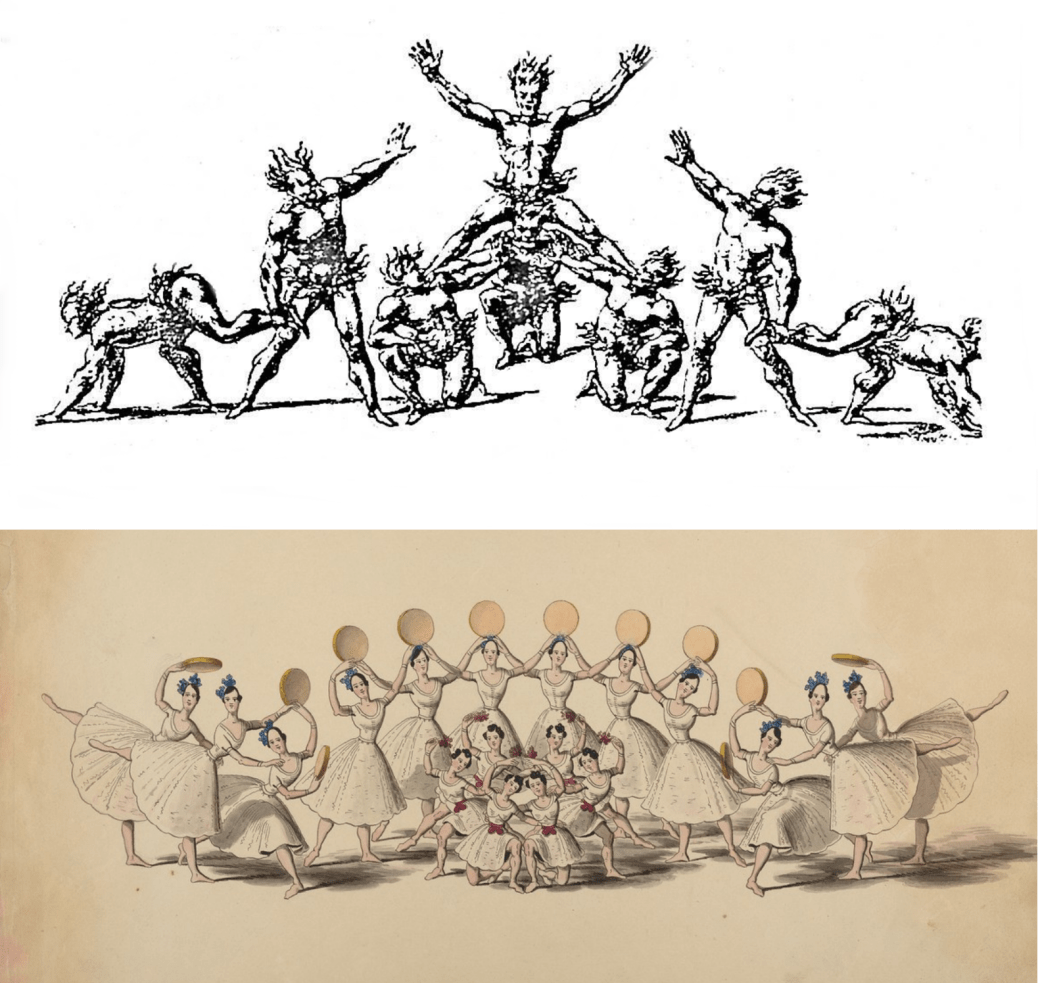
Examples of early Tableaux. Top: a late 17C grouping of acrobats; bottom: an early 19C grouping of dancers.
LATE 18C FRENCH PANTOMIME BALLET
For more information about the general features of the pantomime ballets mounted at the Paris Opéra 1776-1799, view the video below:
 Eighteenth-Century Ballet