PUBLICATIONS
The Styles of Eighteenth-Century Ballet (2003 Scarecrow Press)
Publisher’s blurb:
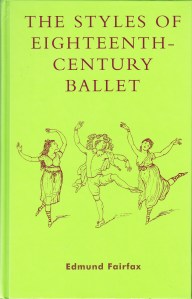 The current notion of ballet history holds that the theatrical dance of the eighteenth century was simple, earthbound, and limited in range of motion, scarcely different from the ballroom dance of the same period. Contemporary opinion also maintains that this early form of ballet was largely a stranger to the tours de force of grand jumps, multiple turns, and lifts so typical of classical ballet, owing to a supposed prevailing sense of Victorian-like decorum.
The Styles of Eighteenth-Century Ballet explodes this false view of ballet history, showing that there were in fact a variety of different styles cultivated in this era — from the simple to the remarkably difficult, from the dignified and earthbound to the spirited airborne, from the gravely serious to the grotesquely ridiculous.
This is a fascinating exploration of the various styles of eighteenth-century dance, including ballroom and ballet; the four traditional styles of theatrical dance; regional preferences for given styles; dance according to gender; the overall voluptuous nature of stage dancing; and finally, dance notation and costume. Fairfax takes the reader on an in-depth journey through the world of ballet from the age of Mozart, Boucher, and Casanova.
Available through Amazon or directly from Bloomsbury.
The Technique of Eighteenth-Century Ballet (in progress)
Blurb yet to be added.
La chercheuse d’esprit, A Pantomime Ballet by Maximilien Gardel (1777) (in progress)
Blurb yet to be added.
PERFORMANCES
UPCOMING PERFORMANCES
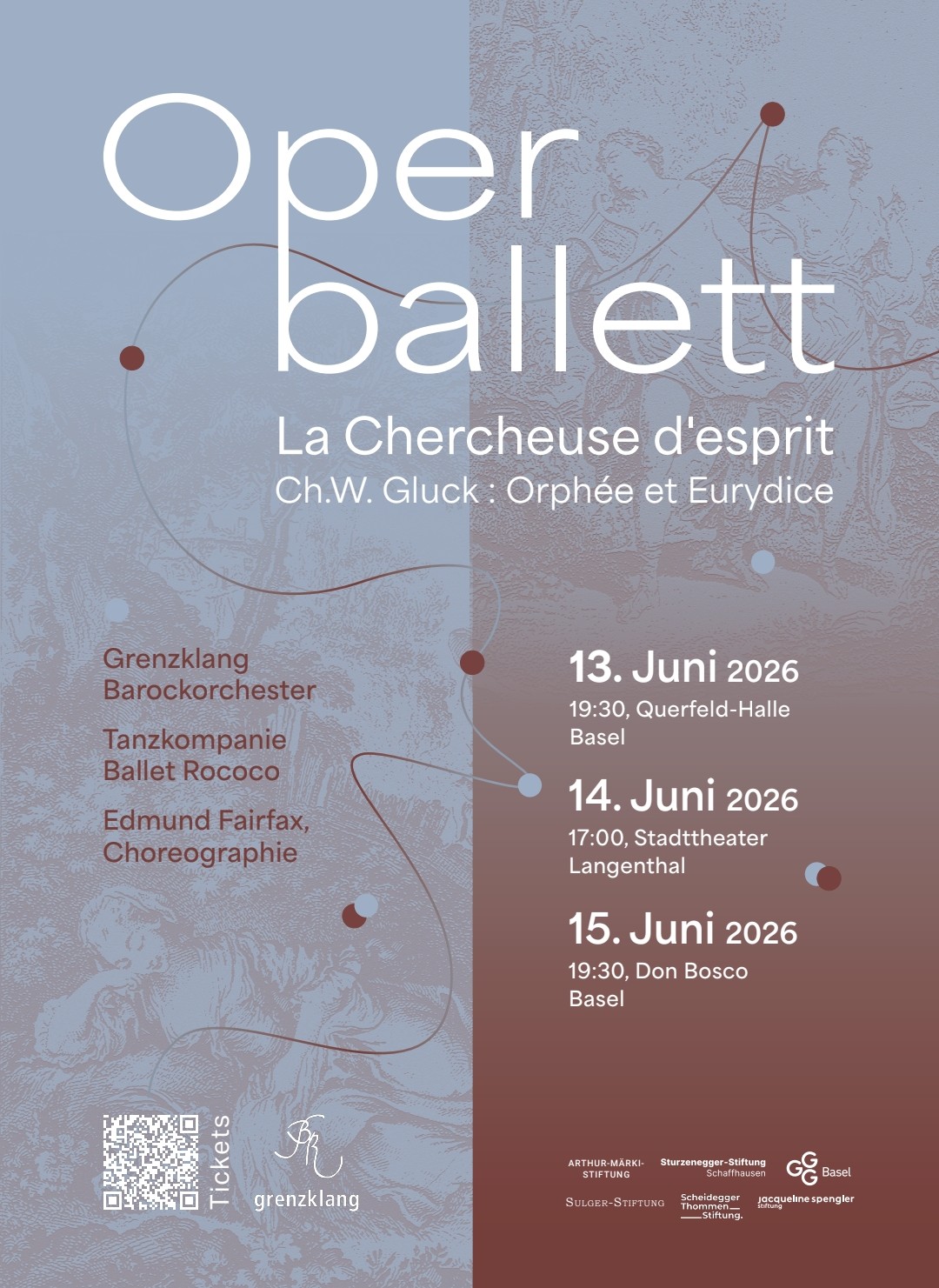
Revival of Gardel’s 1777 Pantomime Ballet La chercheuse d’esprit
(13-15 June 2026, Basel and Langenthal, Switzerland)
PAST PERFORMANCES
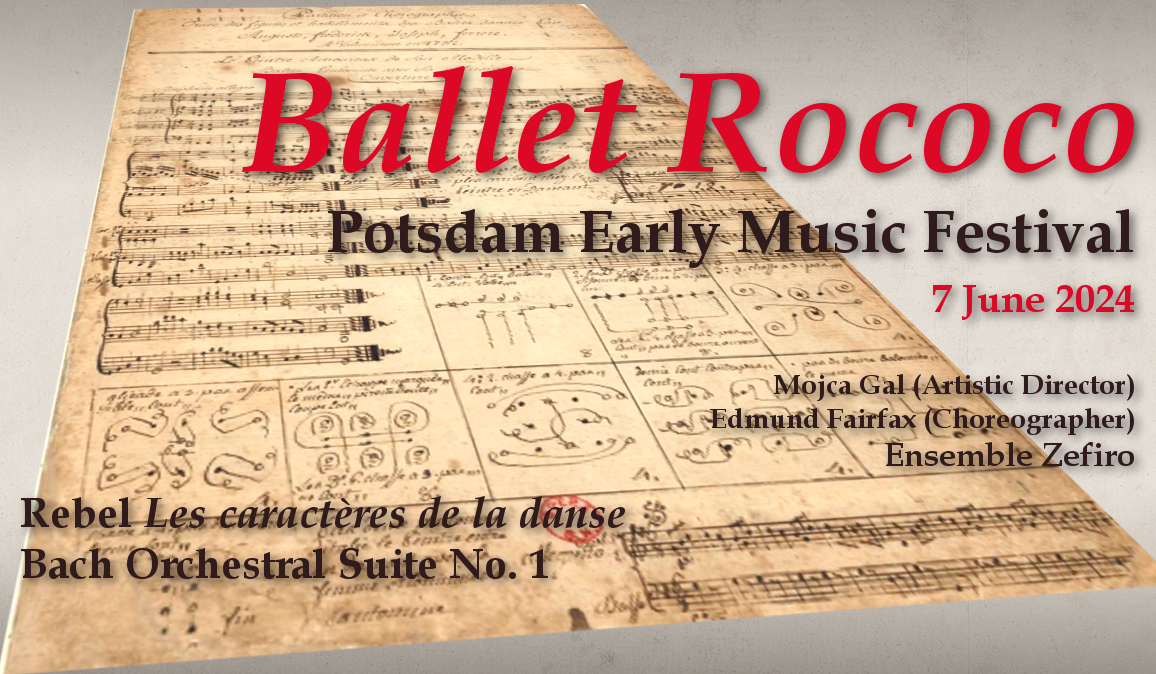
Choreography for Rebel’s Les caractères de la danse & Bach’s Orchestral Suite No. 1
(7 June 2024, Potsdam Early Music Festival)
CONFERENCE PRESENTATIONS
UPCOMING PRESENTATION
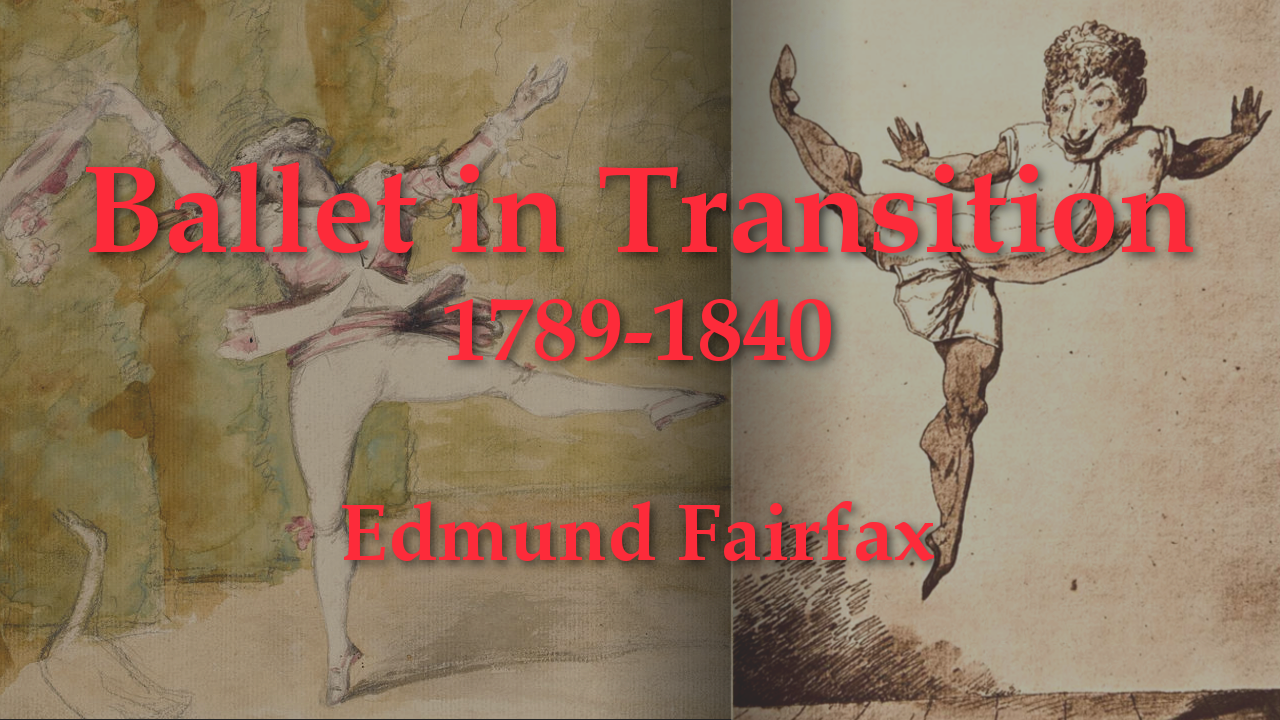
“Ballet in Transition: 1789-1840”
(June 2026, Sixth Historical Dance Symposium: “Transitions,” Dance in Times of Change 1400-1900, Burg Rothenfels am Main)
While broad dance-history surveys not uncommonly state that the art of ballet underwent significant changes during the years 1789-1840, there has been, however, little attempt to discern what specific changes affected the technique and style of dance in French theaters, changes which, in turn, were widely imitated in other theaters. This illustrated presentation will attempt to fill the void in part, discussing the dissolution of the old system of distinct dance styles, which informed stage-dancing in the eighteenth century before the French Revolution; the emergence of a new blended style under the influence of the superstar dancer Auguste Vestris during the Revolution; and finally the advent of a reactionary style associated with the age of “Romantic” ballet and specifically with Marie and Philippe Taglioni. The presentation will look at some specifics in technique and choreography, notably height of leg-extensions, port de bras, pointe-work, step innovation, and the formation of enchaînements.
PAST PRESENTATIONS
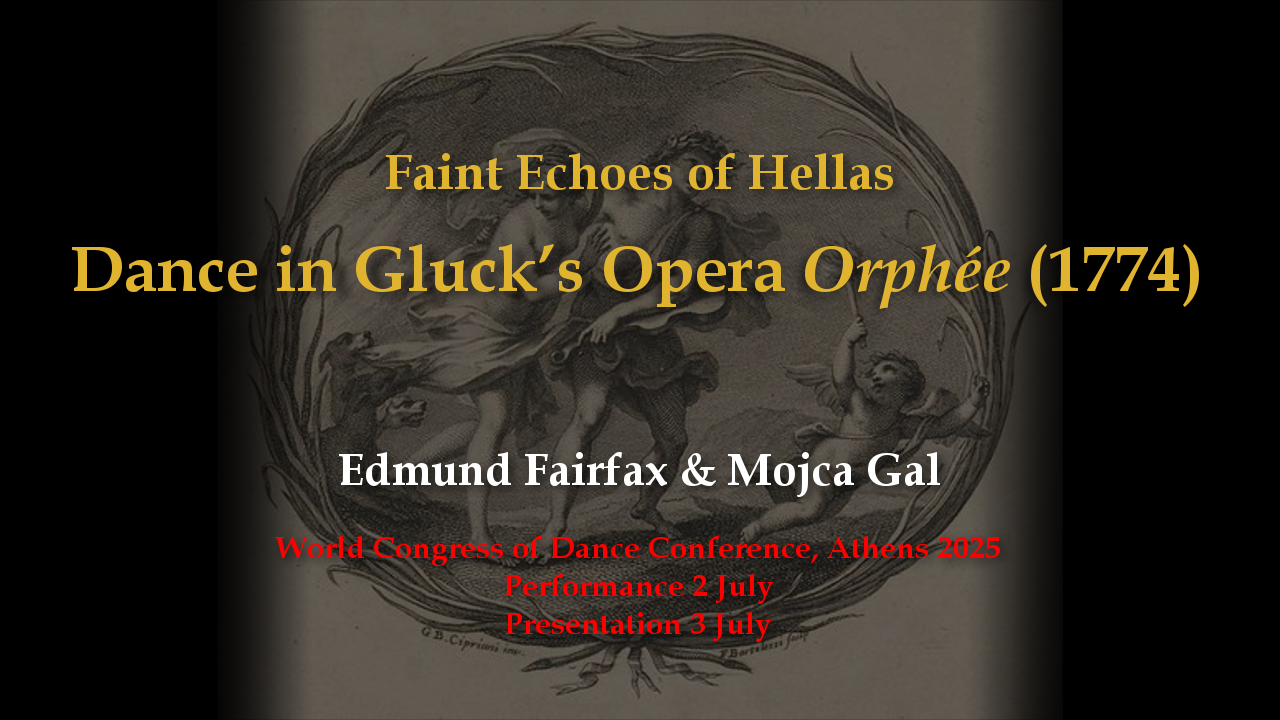
“Faint Echoes of Hellas: Dance in Gluck’s Opera Orphée (1774)”
(2-3 July 2025, World Congress of Dance Conference, Athens)
This presentation provides an introduction to various aspects of late eighteenth-century ballet, using the 1774 Paris Opéra production of Gluck’s opera Orphée et Eurydice as a case study. Discussed are the concept of the French operatic dance divertissement; the basic character of ballet at this time, including both technical and stylistic features; some common choreographic conventions; the choices of music to be used as dance accompaniment; and specifically the nature of the dances in the divertissements to Gluck’s opera, as far as they can be reconstructed. To complement this lecture, a historically informed two-part extended solo is also being presented separately. Lecture material by Edmund Fairfax, presented by Mojca Gal (3 July).
This historically informed two-part extended solo, to a medley of dance airs from Gluck’s opera Orphée et Eurydice as staged at the Paris Opéra in 1774, presents choreography intended to demonstrate the character of the serious style (a terre-à-terre genre) as well as the half-serious style (a bubbly jumping genre), two of the four conventional styles cultivated in eighteenth-century ballet. This choreography is intended to complement the presentation “Faint Echoes of Hellas: Dance in Gluck’s Opera Orphée (1774),” which discusses some of the technical and stylistic features in the choreography. Choreography by Edmund Fairfax, performance by Mojca Gal (2 July).
Pantomime Ballet at the Paris Opéra 1776-1799
(11 August 2024, “Historical Dance at Play: Express Thyself!” hosted by the New York Baroque Dance Company)
This is an introduction to the twenty-five or so pantomime ballets which were mounted at the Paris Opéra in the late eighteenth century, an institution widely regarded in its day as the hotspot for fine performances by the leading dancers of the time; as well as a locus for the performance of sophisticated ballets, created by such greats as Noverre, the Gardel brothers, and a few others. This introduction will examine what these works looked and sounded like, as far as that can be recovered: specifically, the nature of the scenarios and scores, as well as the characteristic features of the pantomime and choreography (with many visuals, digital reconstructions and samples of music). What emerges is a “ghost” corpus of very sophisticated works, even “lost classics” in some cases, which have been largely ignored or only superficially treated in ballet history.
An Introduction to the Comic Style of Eighteenth-Century Ballet
(27 August 2022, “Historical Dance at Play: Welcome Home II,” hosted by the New York Baroque Dance Company)
This is an introduction to the comic style of eighteenth-century ballet, one of the four conventional styles of the period (alongside the serious, half-serious and grotesque). It includes some information on the grotesque, as well as the serious, by way of contrast. A recreation of a comic peasant dance, as it might have been performed in the pantomime ballet Ninette à la cour (1777), is also included as a demonstration, performed by Mojca Gal.
 Eighteenth-Century Ballet